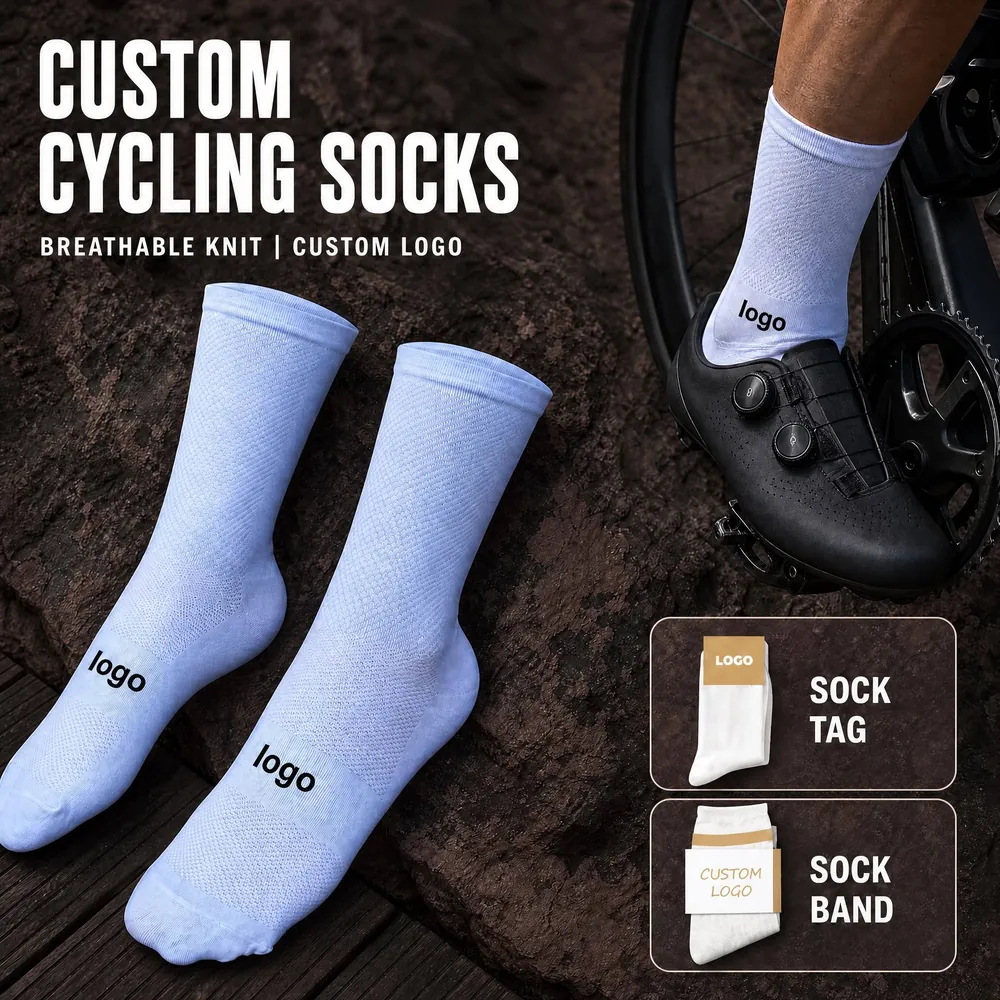
A custom sock sample is a small investment, but a bad file can waste it. These are the checks we run before a design goes to the knitting machine — and the ones you can do before sending it.
1. Send vector artwork where possible
AI, EPS or PDF files keep their edges at any size. A 300 dpi PNG with a transparent background is the next best option. Screenshots, JPEGs from social media and photos of a business card are usually too soft for a crisp knit.
2. Design for the stitch, not the screen
A jacquard sock is made of loops, not pixels. Very thin lines, small text and subtle gradients disappear. As a rule, keep line weights above 1.5 mm at final size and body text above 8 pt. If a detail is smaller than a grain of rice on the sock, it will not read.
3. Give us colour references
Pantone TCX or TPX references are ideal. If you only have CMYK or RGB values, send them plus a physical reference if possible. We will match to the closest available yarn — a small shift is normal in dyed cotton.
4. Decide where the logo sits
An ankle logo, a calf panel and an all-over pattern are different knitting programmes. Tell us the placement and the finished size in centimetres. If you want the logo on both sides, say so; it affects the machine setup.
5. Think about the base colour
A bright logo on a dark sock may need an extra base layer or a different yarn. White on black can look grey; neon on navy can dull. We will show you the closest match in the mockup before sampling.
Send the file with your quantity and target date and we will come back with a mockup and a recommendation — usually within one business day.