
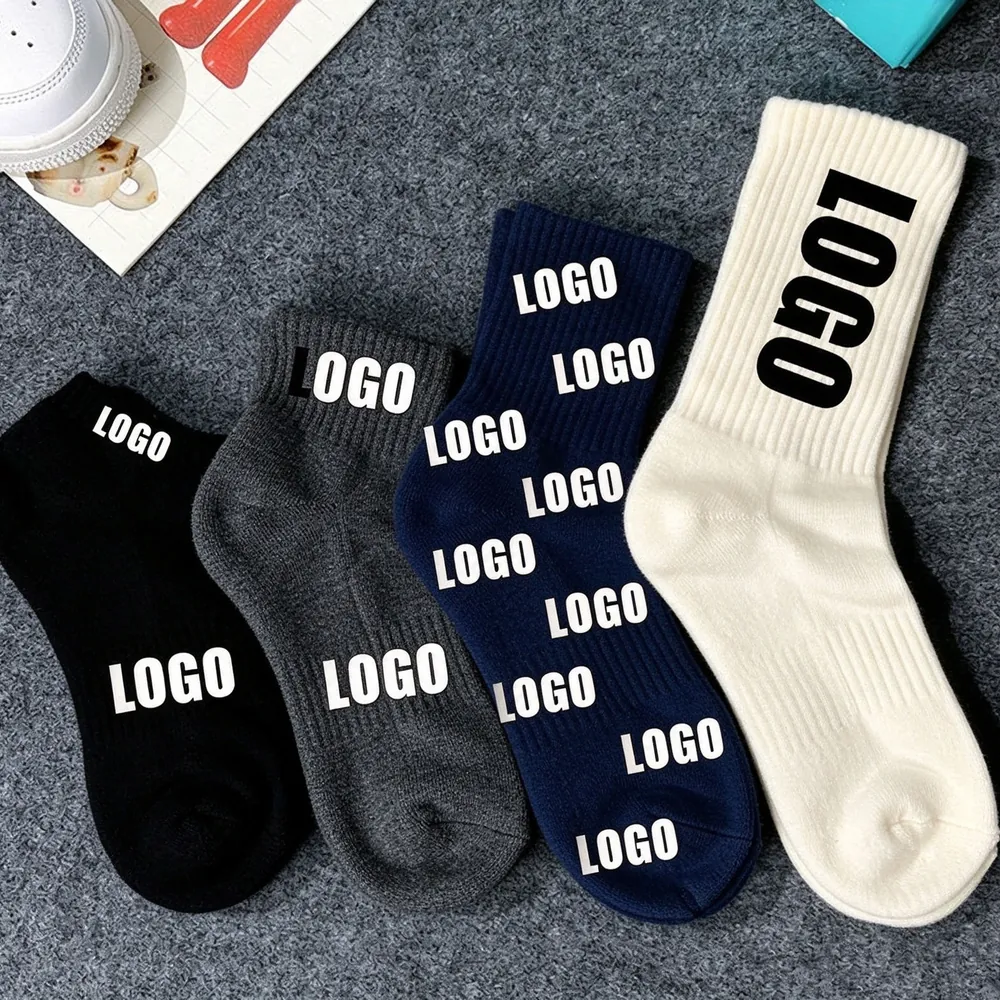
Most sock factories quote a 500- or 1,000-pair minimum because setup time is the same whether they make 100 or 10,000. That math is real. But it is also why so many first-time brand owners end up with a cupboard full of a design that did not sell.
A 100-pair run is enough to test a design with real customers, photograph it properly, and learn which colour and size sell before you commit to a bulk order.
What a small run actually costs
At 100 pairs, the per-pair price is higher than at 1,000 — usually 20–40% higher. The sample fee, the artwork setup and the machine time are spread over fewer units. But the total cash at risk is far lower, and you get real feedback instead of a spreadsheet projection.
What you learn
You learn whether the cuff stays up, whether the colour matches your brand, whether the size run is right, and whether customers actually pick the design off a shelf. You also get a professional photo set and a real product to show wholesale buyers.
How to scale without paying twice
Keep the same yarn, knit structure and colour references. A repeat order on the same specification does not need a new sample or a new setup; we reopen the programme and run the next quantity. That is why we ask you to approve a physical sample, not just a digital mockup.
If you are testing a new brand, start with 100 pairs in one colourway and two sizes. If it works, add colours. If it does not, you have learned something for the price of a small run — not a container.